Navigation
Install the app
How to install the app on iOS
Follow along with the video below to see how to install our site as a web app on your home screen.
Note: This feature may not be available in some browsers.
More options
Style variation
You are using an out of date browser. It may not display this or other websites correctly.
You should upgrade or use an alternative browser.
You should upgrade or use an alternative browser.
Nice cars other than x-fire
- Thread starter 1st Vette
- Start date






LE BARON
Power User





The 1978 Corvette Indy 500 Pace Car was supposed to be genuinely limited. Chevrolet originally planned just 2,500 replicas, roughly 100 for every Corvette model year since its 1953 introduction. Then reality got in the way. With more than 6,200 Chevrolet dealerships wanting a car for their showrooms, Chevrolet changed course and ultimately built 6,502 examples, essentially one for every dealer.
That made this “Limited Edition” Corvette one of the largest special edition Corvette runs of its era, accounting for roughly 15 percent of all 1978 Corvettes.
The package brought black-over-silver paint, red pinstriping, front and rear spoilers, aluminum wheels, glass T-tops and special interior trim. Buyers could choose the 185 hp L48 or optional 220 hp L82 350 V8.
And on May 28, 1978, a Corvette finally paced the Indy 500 for the first time, driven by Indy winner Jim Rathmann.

That made this “Limited Edition” Corvette one of the largest special edition Corvette runs of its era, accounting for roughly 15 percent of all 1978 Corvettes.
The package brought black-over-silver paint, red pinstriping, front and rear spoilers, aluminum wheels, glass T-tops and special interior trim. Buyers could choose the 185 hp L48 or optional 220 hp L82 350 V8.
And on May 28, 1978, a Corvette finally paced the Indy 500 for the first time, driven by Indy winner Jim Rathmann.
LE BARON
Power User
Dodge needed a cheap street brawler to compete with the incredibly successful Plymouth Road Runner. They created the Super Bee by stripping down a standard Coronet and focusing entirely on raw horsepower. Then in 1970 designers made a wildly controversial aesthetic choice.
They gave the front end a twin loop bumper that resembled massive chrome eyeglasses. Buyers at the time absolutely hated the polarizing design. Sales plummeted while sleeker cars dominated the showroom.
Yet that exact visual rejection makes this specific year so desirable today. The Super Bee never tried to be a beautiful cruiser. It was an unapologetic machine that came standard with a 383 cubic inch Magnum V8 and heavy duty suspension. Racers could even option the terrifying 440 Six Pack or the legendary Hemi.
It wore its strange face like a badge of honor. This weird heavyweight proved that true street respect comes from brutal track performance rather than a pretty smile.

They gave the front end a twin loop bumper that resembled massive chrome eyeglasses. Buyers at the time absolutely hated the polarizing design. Sales plummeted while sleeker cars dominated the showroom.
Yet that exact visual rejection makes this specific year so desirable today. The Super Bee never tried to be a beautiful cruiser. It was an unapologetic machine that came standard with a 383 cubic inch Magnum V8 and heavy duty suspension. Racers could even option the terrifying 440 Six Pack or the legendary Hemi.
It wore its strange face like a badge of honor. This weird heavyweight proved that true street respect comes from brutal track performance rather than a pretty smile.
LE BARON
Power User
The Biscayne occupied the bottom rung of Chevrolet’s full-size lineup, built with fewer frills than the Bel Air and Impala. That made it an unlikely place to hide serious performance.
But 1961 was the year Chevrolet introduced the 409, and a tiny number of these plain-looking Chevys received the new 360 horsepower big-block. Only 142 examples of the 409 were built that year, making the engine itself exceptionally scarce.
Some of the most interesting cars were Biscayne Fleetmasters, stripped-down versions intended for fleet use. At least a handful were ordered specifically with the 409 for drag racing, taking advantage of the car’s lower equipment level and lighter weight.
That combination created exactly the kind of car enthusiasts still chase today: ordinary-looking Chevrolet sheet metal hiding serious hardware underneath.
And that's why the 1961 Chevrolet Biscayne deserves its sleeper reputation. It didn't need stripes, spoilers, or a glamorous badge to make a fast car

But 1961 was the year Chevrolet introduced the 409, and a tiny number of these plain-looking Chevys received the new 360 horsepower big-block. Only 142 examples of the 409 were built that year, making the engine itself exceptionally scarce.
Some of the most interesting cars were Biscayne Fleetmasters, stripped-down versions intended for fleet use. At least a handful were ordered specifically with the 409 for drag racing, taking advantage of the car’s lower equipment level and lighter weight.
That combination created exactly the kind of car enthusiasts still chase today: ordinary-looking Chevrolet sheet metal hiding serious hardware underneath.
And that's why the 1961 Chevrolet Biscayne deserves its sleeper reputation. It didn't need stripes, spoilers, or a glamorous badge to make a fast car
LE BARON
Power User
In 1932 America was drowning in the Great Depression and a brand new Ford cost roughly $500. But the ultra wealthy completely ignored traditional car lots.
When you purchased a Duesenberg Model J you were only buying the rolling chassis and the massive 420 cubic inch straight eight engine. You then shipped that bare frame to master coachbuilders like Rollston or Murphy to hand craft a custom Town Car shell.
This bespoke metalwork and lavish interior alone could easily cost ten thousand dollars. The coachwork by itself could literally purchase a fleet of 20 brand new family cars.
Inside the enclosed rear cabin wealthy passengers enjoyed pure acoustic isolation surrounded by silk floral upholstery and gold plated hardware. Meanwhile the hired chauffeur sat entirely exposed to the elements up front. This rolling palace was the ultimate display of American aristocracy and proved that true elite status meant spending an absolute fortune just to avoid ordinary sheet metal

When you purchased a Duesenberg Model J you were only buying the rolling chassis and the massive 420 cubic inch straight eight engine. You then shipped that bare frame to master coachbuilders like Rollston or Murphy to hand craft a custom Town Car shell.
This bespoke metalwork and lavish interior alone could easily cost ten thousand dollars. The coachwork by itself could literally purchase a fleet of 20 brand new family cars.
Inside the enclosed rear cabin wealthy passengers enjoyed pure acoustic isolation surrounded by silk floral upholstery and gold plated hardware. Meanwhile the hired chauffeur sat entirely exposed to the elements up front. This rolling palace was the ultimate display of American aristocracy and proved that true elite status meant spending an absolute fortune just to avoid ordinary sheet metal

- Thread starter
- #1,907
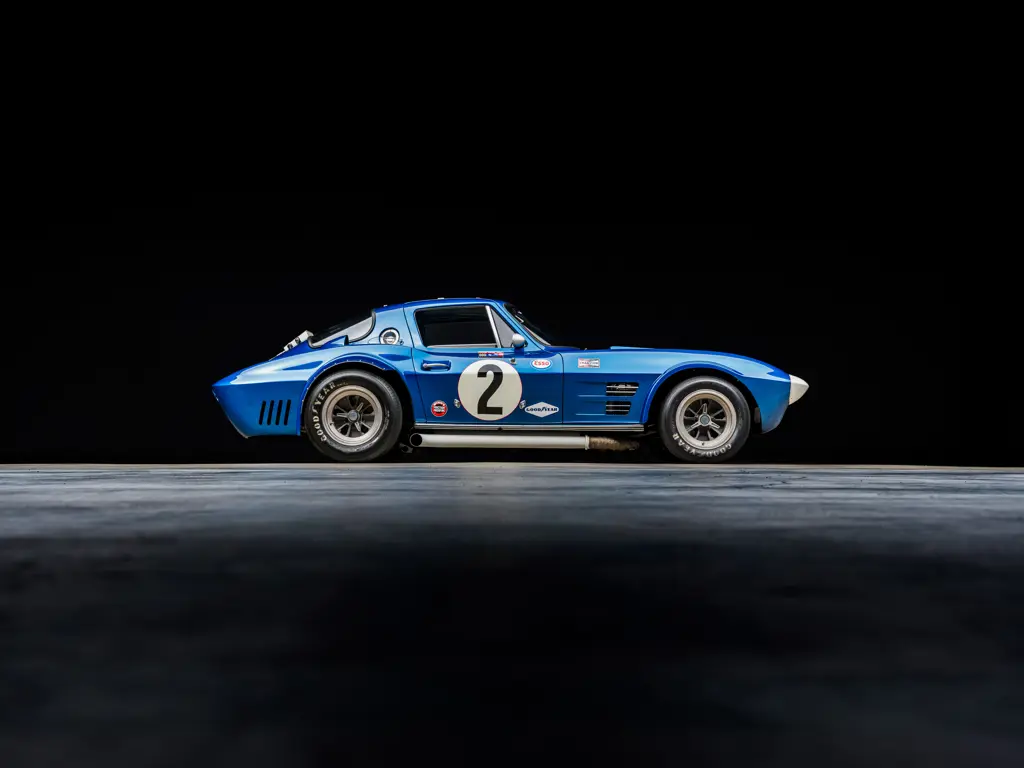
Expected to hammer at the upcoming Sotheby's Auction at between $10,000,000 and $12,000,000 ........


Another Icarus | RM Sotheby's
Developed in secret and banned before reaching its potential, the Corvette Grand Sport is one of the greatest American sports cars ever built, reckons Adam Hay-Nicholls.
rmsothebys.com



I bought my wife a used one when we were first married. Ours was '69 I believe. Loved the look.The Biscayne occupied the bottom rung of Chevrolet’s full-size lineup, built with fewer frills than the Bel Air and Impala. That made it an unlikely place to hide serious performance.
But 1961 was the year Chevrolet introduced the 409, and a tiny number of these plain-looking Chevys received the new 360 horsepower big-block. Only 142 examples of the 409 were built that year, making the engine itself exceptionally scarce.
Some of the most interesting cars were Biscayne Fleetmasters, stripped-down versions intended for fleet use. At least a handful were ordered specifically with the 409 for drag racing, taking advantage of the car’s lower equipment level and lighter weight.
That combination created exactly the kind of car enthusiasts still chase today: ordinary-looking Chevrolet sheet metal hiding serious hardware underneath.
And that's why the 1961 Chevrolet Biscayne deserves its sleeper reputation. It didn't need stripes, spoilers, or a glamorous badge to make a fast car
View attachment 142576
Last edited:


69 GS wasn't a 'Mongoose'. Totally different animal than the 63....I bought my wife a used one when we were first married. Ours was '69 I believe. Loved the look.
LE BARON
Power User
When Oldsmobile released the Toronado in 1966 it completely stunned the world. Building a massive luxury coupe driven entirely by its front wheels challenged everything Detroit believed about automotive engineering. But for a rogue group of performance engineers that heavy front wheel drive cruiser was begging for a muscle car treatment.
They quietly slipped the W34 performance package onto dealership order forms starting in 1968. If a buyer knew which box to check Oldsmobile dropped a heavily modified 455 cubic inch Rocket V8 under the massive hood. Equipped with a high lift camshaft and cold air induction this monster produced an official 400 horsepower and 500 pound feet of torque.
It remains the most powerful engine Oldsmobile ever offered to the public. Paired with a transmission specially calibrated for aggressive upshifts this front wheel drive land yacht became a terrifying sleeper. It could effortlessly humiliate traditional street racers while keeping its passengers completely surrounded by quiet luxury.

They quietly slipped the W34 performance package onto dealership order forms starting in 1968. If a buyer knew which box to check Oldsmobile dropped a heavily modified 455 cubic inch Rocket V8 under the massive hood. Equipped with a high lift camshaft and cold air induction this monster produced an official 400 horsepower and 500 pound feet of torque.
It remains the most powerful engine Oldsmobile ever offered to the public. Paired with a transmission specially calibrated for aggressive upshifts this front wheel drive land yacht became a terrifying sleeper. It could effortlessly humiliate traditional street racers while keeping its passengers completely surrounded by quiet luxury.
LE BARON
Power User
When legendary engineer Zora Arkus Duntov walked out of his office for the last time in early 1975, he left his beloved sports car standing at a brutal crossroads. Strict federal emissions laws had officially killed the terrifying big block engines, forcing Chevrolet to fundamentally rewrite the rulebook.
For the first time, mandatory catalytic converters were stuffed under the floorboards to clean the exhaust. The absolute hottest motor buyers could spec was the L82, a 350 cubic inch small block pushing a heavily restricted 205 horsepower. To add insult to injury, executives announced this would be the final year anyone could buy a convertible.
Performance purists thought the sky was falling. But the fiberglass icon simply evolved. Instead of dominating drag strips, the 1975 model pivoted heavily toward refined handling and comfortable grand touring. Customers absolutely loved the shift, buying nearly 40,000 units and proving the Corvette could successfully survive a much slower reality.

For the first time, mandatory catalytic converters were stuffed under the floorboards to clean the exhaust. The absolute hottest motor buyers could spec was the L82, a 350 cubic inch small block pushing a heavily restricted 205 horsepower. To add insult to injury, executives announced this would be the final year anyone could buy a convertible.
Performance purists thought the sky was falling. But the fiberglass icon simply evolved. Instead of dominating drag strips, the 1975 model pivoted heavily toward refined handling and comfortable grand touring. Customers absolutely loved the shift, buying nearly 40,000 units and proving the Corvette could successfully survive a much slower reality.
LE BARON
Power User
Shopping for a muscle car at the peak of the horsepower wars was often a frustrating bait-and-switch. Dealerships lured you in with a tempting base price, only to reveal that the legendary, pavement-ripping V8 featured in the magazine ads was actually a painfully expensive optional extra.
Mercury decided to skip the upsell game completely. If you stepped onto the lot and ordered a 1970 Cyclone Spoiler, there was no haggling over displacement.
Beneath that menacing, protruding "gunsight" grille and functional Ram Air hood scoop, Ford's devastating 429 cubic inch Cobra Jet V8 came absolutely standard. While Chevy and Plymouth buyers were shelling out heavy premiums to upgrade from their mid-tier big blocks, Mercury handed you 370 raw horsepower right out of the box.
They didn't stop at the engine compartment, either. A heavy-duty competition suspension, an 800 cfm Holley carburetor, and aggressive aerodynamic spoilers were all baked directly into the base sticker price. It was a refreshing anomaly in Detroit: a fully loaded, top-tier street brawler that never forced you to compromise.

Mercury decided to skip the upsell game completely. If you stepped onto the lot and ordered a 1970 Cyclone Spoiler, there was no haggling over displacement.
Beneath that menacing, protruding "gunsight" grille and functional Ram Air hood scoop, Ford's devastating 429 cubic inch Cobra Jet V8 came absolutely standard. While Chevy and Plymouth buyers were shelling out heavy premiums to upgrade from their mid-tier big blocks, Mercury handed you 370 raw horsepower right out of the box.
They didn't stop at the engine compartment, either. A heavy-duty competition suspension, an 800 cfm Holley carburetor, and aggressive aerodynamic spoilers were all baked directly into the base sticker price. It was a refreshing anomaly in Detroit: a fully loaded, top-tier street brawler that never forced you to compromise.
LE BARON
Power User
LIMITED EDITION GUYS & GALS - GET YOUR ORDER IN BEFORE IT IS TOO LATE
Formula 1 banned fan cars in 1978 after Niki Lauda won a race in the Brabham BT46B and everyone else cried foul. McMurtry Automotive revived that banned trick nearly half a century later and built an entire track hypercar around it. Twin fans behind the cockpit suck air from beneath the Spéirling's floor, generating up to 2,000 kilograms of downforce whether the car is doing 190 miles an hour or sitting still. McMurtry proved the point by driving the car upside down on a rotating rig at its Gloucestershire headquarters, held up by nothing but that vacuum. The same technology has already broken the Goodwood hillclimb record and beaten a Formula 1 car's time around the Top Gear test track. Only 100 production versions will be built, each priced near 1.3 million dollars. Whatever Lauda felt driving away from that grid in 1978, somebody just found a legal way to feel it again

Formula 1 banned fan cars in 1978 after Niki Lauda won a race in the Brabham BT46B and everyone else cried foul. McMurtry Automotive revived that banned trick nearly half a century later and built an entire track hypercar around it. Twin fans behind the cockpit suck air from beneath the Spéirling's floor, generating up to 2,000 kilograms of downforce whether the car is doing 190 miles an hour or sitting still. McMurtry proved the point by driving the car upside down on a rotating rig at its Gloucestershire headquarters, held up by nothing but that vacuum. The same technology has already broken the Goodwood hillclimb record and beaten a Formula 1 car's time around the Top Gear test track. Only 100 production versions will be built, each priced near 1.3 million dollars. Whatever Lauda felt driving away from that grid in 1978, somebody just found a legal way to feel it again
LE BARON
Power User
When the Corvette debuted, it changed American sports cars forever. But General Motors design chief Harley Earl wasn’t finished dreaming. For the 1954 Motorama, he decided Pontiac needed its own fiberglass two seater, only this one would look ready for a lunar orbit.
The Bonneville Special borrowed the Corvette's basic chassis but amplified the jet age drama. Earl ditched the traditional convertible roof for a clear Plexiglas bubble canopy modeled directly after fighter aircraft, complete with flipping gullwing windows. Deep scoops and a finned tail gave it an unmistakable aerodynamic stance.
Under the hood, Pontiac faced a slight problem. They didn't have a modern V8 engine ready yet. Instead, engineers took their aging 268 cubic inch straight eight, bolted on four side draft carburetors, and pushed it to an impressive 230 horsepower.
General Motors only built two of these spectacular concepts. While it never reached mass production, this wildly optimistic prototype introduced the legendary Bonneville nameplate and perfectly captured Detroit's obsession with the sky.

The Bonneville Special borrowed the Corvette's basic chassis but amplified the jet age drama. Earl ditched the traditional convertible roof for a clear Plexiglas bubble canopy modeled directly after fighter aircraft, complete with flipping gullwing windows. Deep scoops and a finned tail gave it an unmistakable aerodynamic stance.
Under the hood, Pontiac faced a slight problem. They didn't have a modern V8 engine ready yet. Instead, engineers took their aging 268 cubic inch straight eight, bolted on four side draft carburetors, and pushed it to an impressive 230 horsepower.
General Motors only built two of these spectacular concepts. While it never reached mass production, this wildly optimistic prototype introduced the legendary Bonneville nameplate and perfectly captured Detroit's obsession with the sky.

Dave91TM
Power User


It looks toothless, also has hints of Pontiac Solstice in the front fenders and headlights. But the again, my eyes are getting old.When the Corvette debuted, it changed American sports cars forever. But General Motors design chief Harley Earl wasn’t finished dreaming. For the 1954 Motorama, he decided Pontiac needed its own fiberglass two seater, only this one would look ready for a lunar orbit.
The Bonneville Special borrowed the Corvette's basic chassis but amplified the jet age drama. Earl ditched the traditional convertible roof for a clear Plexiglas bubble canopy modeled directly after fighter aircraft, complete with flipping gullwing windows. Deep scoops and a finned tail gave it an unmistakable aerodynamic stance.
Under the hood, Pontiac faced a slight problem. They didn't have a modern V8 engine ready yet. Instead, engineers took their aging 268 cubic inch straight eight, bolted on four side draft carburetors, and pushed it to an impressive 230 horsepower.
General Motors only built two of these spectacular concepts. While it never reached mass production, this wildly optimistic prototype introduced the legendary Bonneville nameplate and perfectly captured Detroit's obsession with the sky.
View attachment 142649
Yup... Looks like my grandfather did when he took out his dentures....It looks toothless, also has hints of Pontiac Solstice in the front fenders and headlights. But the again, my eyes are getting old.


Early split window.

53 was the last year of the split window. I had a 58, a 62, and a 72.Early split window.View attachment 142707
LE BARON
Power User
n the late 1980s Chevrolet decided the Corvette needed a true flagship again. The regular L98 small-block was solid, but it was never going to scare the Europeans. So the company turned to Lotus for something completely different.
What arrived in 1990 was the LT5. Same 5.7 liter displacement as the standard engine, yet almost nothing else in common. Aluminum block and heads, dual overhead cams, 32 valves, and sixteen injectors. Mercury Marine built the engines by hand in Oklahoma. Rated at 375 horsepower, it turned the ZR-1 into a 180-mph car that could run with the best of its day.
The rest of the package followed: wider rear fenders, bigger tires, and a six-speed that could handle the power. From the outside it still looked like a Corvette, only meaner. Under the hood it was something else entirely.
Later ZR1s would make more power with engines that still shared DNA with the regular Corvette. The 1990 model remains the last time Chevrolet had to invent a whole new powerplant just to put the ’Vette back on top

What arrived in 1990 was the LT5. Same 5.7 liter displacement as the standard engine, yet almost nothing else in common. Aluminum block and heads, dual overhead cams, 32 valves, and sixteen injectors. Mercury Marine built the engines by hand in Oklahoma. Rated at 375 horsepower, it turned the ZR-1 into a 180-mph car that could run with the best of its day.
The rest of the package followed: wider rear fenders, bigger tires, and a six-speed that could handle the power. From the outside it still looked like a Corvette, only meaner. Under the hood it was something else entirely.
Later ZR1s would make more power with engines that still shared DNA with the regular Corvette. The 1990 model remains the last time Chevrolet had to invent a whole new powerplant just to put the ’Vette back on top
Users who are viewing this thread
Total: 8 (members: 0, guests: 8)