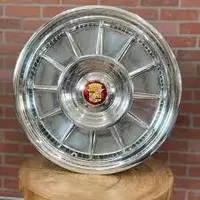





Guess the car and year.

1958 Ford Nucleon.

I wonder what would happen in a vehicle accident. Thousands/millions of Three Mile Islands in the world

Copy and pasted article below.

the 1958 Ford Nucleon was supposed to be a nuclear-powered car, which quite surprisingly, is just one of a handful of such designs during the 1950s and 60s. That’s right, there would have been no internal-combustion engine, but instead a small nuclear reactor in the rear of the vehicle, based on the assumption that this would one day be possible by reducing its size.
The Ford Nucleon would have been equipped with a steam engine powered by uranium fission, similar to those found in nuclear submarines. You can actually view a mock-up of the car in-person at the Henry Ford Museum in Dearborn, Michigan. Nuclear technology was relatively new at the time, and it was thought that nuclear fission technology could eventually be made compact and affordable enough to become a primary energy source in the US. There would be numerous full service recharging stations nationwide and it would take around 5000-miles before the reactor would need to be exchanged for a new one.
Too bizarre for sure. Some day it will happen but not in our Grandchildren's lifetimes I would bet . Cold fusion has been 10 years away for the last 60 years and if it's ever achieved it would be the greatest most beneficial development in human history. I think so far using the Tokamak design they have achieved more energy out than in but only for a matter of a few seconds . Would be incredible to see what's happening 100 years from now. That is if the world still has any humans alive on it by then .
 
Figure this one out without searching and get bonus points .
OIP-2631646675.webp
 
At first Ferrarri, but then the cheapy looking wheels so maybe a Pantera?
Wrong side of the pond I'm afraid. I wouldn't have guessed in 100 years . In fairness I should say it's a concept car and you were warm , they did take inspiration from Ferrari it seems. Except for the wheels, lol. It looks nothing like any other of the same model.
 
on Windows 11

right click on picture
go to more tools
click on search the web for image


Boom shuck a lucka..........................................

Here we have a Cadillac that was designed by a legendary racecar driver - Luigi Chinetti. He had been racing Ferraris for years and wanted to create his own car. What we got was the 1970 NART Zagato. The project started in 1969, with General Motors supplying the chassis and 500 cubic-inch V-8 engine. NART stands for North American Racing Team.
According to an old article from Brussels Oldtimers, Chinetti came up with the exterior design himself and commissioned Zagato to make a full-scale body out of aluminum. Unfortunately, Cadillac decided not to move past the concept phase and this car was buried before it could take its place in history. It popped up in an online auction back in 2015 and has not been heard from since.
 
Hmmmm....looks familiar to a number of vehicles. Nice wheels. View attachment 136278
I see:
nose and tail appear to extend further than the bumpers, so bumpers are useless
rear view mirrors mounted on fenders
smallish knock off wire wheels, tall sidewalls on tires 14 or 15 inch
ground clearance diminished by low hanging exhaust....
Maybe late 60's, British, Aston Martin??
 
I see:
nose and tail appear to extend further than the bumpers, so bumpers are useless
rear view mirrors mounted on fenders
smallish knock off wire wheels, tall sidewalls on tires 14 or 15 inch
ground clearance diminished by low hanging exhaust....
Maybe late 60's, British, Aston Martin??
My side view mirrors on my 64 Bonneville were on the fender but just foreword of the A pilar . I kinda liked them. These look like they would be hard to see anything out of being that far forward.
A rare beast this one .
Most Popular Classics Modern

Trident Clipper V-8


V-8 Coupé
271 bhp, 289 cu. in. OHV Ford V-8 engine, 4-barrel Holley carburettor, four-speed Borg-Warner manual transmission, independent coil spring and wishbone front suspension, semi-elliptic spring with live axle rear suspension, and front disc and rear drum hydraulic brakes. Wheelbase: 2,360 mm (92.9")

• The sixth Trident Clipper built; sold new in Austin, Texas

• One of 10 with 289 Ford Hi-Po engines; showing under 8,000 miles

• 1996 Pebble Beach entrant; featured in Automobile Quarterly

• Zero to 60 in under 5 seconds; 14.3-second quarter mile; top speed of 145 mph

“The red wedge rumbled slowly up the narrow park road. It clearly had a big American V-8, but this car wasn’t home grown, and the only suggestion that it was British came from the Dunlop wire wheels and–for those in the know–the Trident Badge.”

-AUTOMOBILE QUARTERLY, Vol. 39, No.1

So begins the AQ cover story featuring one of the world’s least known, but nonetheless, significant cars of the classic GT era, the Trident Clipper. The Clipper DNA can be traced back to Trevor Wilkinson’s TVR of 1947. In the early 1960s, TVR director Bernard Williams met designer Trevor Frost (also known as Trevor Fiore, as he believed designers should have Italian names). TVR was already producing the stark and terrifying Ford V-8 powered Griffith, and Fiore was commissioned to re-style it. The chassis was sent to Fissore in Italy, and a sleek steel body with pop-up lights was created for the TVR stand at the Geneva Salon in 1965.

As TVR teetered acrimoniously into bankruptcy, TVR dealer Bill Last took over the Trident project, sourcing the Austin-Healey 3000 chassis for the Clipper car and fitting them with a handsome Fiore fibreglass body. A few Clippers were made in LHD and shipped to the U.S., including this one, which was sold originally by International Motors in Austin, Texas. As an early car, this has the “clamshell” hood, which greatly eases access, though the pop-up headlights from the Geneva show car never made it into production.

Rescued in 1988 from the indecency of outside storage, this Clipper was painstakingly restored by Peter Fino to a quality even superior to its condition when new. Finished in Ferrari Rosso Chiaro with a black Connolly leather interior, it was invited to and shown at Pebble Beach in 1996. This particular Clipper was also featured prominently in the Automobile Quarterly feature, gracing the book’s cover in 1999. In total, about 130 Tridents were built, but only 29 were Clippers. With its bulldog chassis, American running gear and light-weight Italian body, and a blistering performance to match, this Trident Clipper is inarguably among, if not the very best, of a rare and desirable breed.
271 bhp, 289 cu. in. OHV Ford V-8 engine, 4-barrel Holley carburettor, four-speed Borg-Warner manual transmission, independent coil spring and wishbone front suspension, semi-elliptic spring with live axle rear suspension, and front disc and rear drum hydraulic brakes. Wheelbase: 2,360 mm (92.9")
• The sixth Trident Clipper built; sold new in Austin, Texas
• One of 10 with 289 Ford Hi-Po engines; showing under 8,000 miles
• 1996 Pebble Beach entrant; featured in Automobile Quarterly
• Zero to 60 in under 5 seconds; 14.3-second quarter mile; top speed of 145 mph
“The red wedge rumbled slowly up the narrow park road. It clearly had a big American V-8, but this car wasn’t home grown, and the only suggestion that it was British came from the Dunlop wire wheels and–for those in the know–the Trident Badge.”
-AUTOMOBILE QUARTERLY, Vol. 39, No.1
So begins the AQ cover story featuring one of the world’s least known, but nonetheless, significant cars of the classic GT era, the Trident Clipper. The Clipper DNA can be traced back to Trevor Wilkinson’s TVR of 1947. In the early 1960s, TVR director Bernard Williams met designer Trevor Frost (also known as Trevor Fiore, as he believed designers should have Italian names). TVR was already producing the stark and terrifying Ford V-8 powered Griffith, and Fiore was commissioned to re-style it. The chassis was sent to Fissore in Italy, and a sleek steel body with pop-up lights was created for the TVR stand at the Geneva Salon in 1965.
As TVR teetered acrimoniously into bankruptcy, TVR dealer Bill Last took over the Trident project, sourcing the Austin-Healey 3000 chassis for the Clipper car and fitting them with a handsome Fiore fibreglass body. A few Clippers were made in LHD and shipped to the U.S., including this one, which was sold originally by International Motors in Austin, Texas. As an early car, this has the “clamshell” hood, which greatly eases access, though the pop-up headlights from the Geneva show car never made it into production.
Rescued in 1988 from the indecency of outside storage, this Clipper was painstakingly restored by Peter Fino to a quality even superior to its condition when new. Finished in Ferrari Rosso Chiaro with a black Connolly leather interior, it was invited to and shown at Pebble Beach in 1996. This particular Clipper was also featured prominently in the Automobile Quarterly feature, gracing the book’s cover in 1999. In total, about 130 Tridents were built, but only 29 were Clippers. With its bulldog chassis, American running gear and light-weight Italian body, and a blistering performance to match, this Trident Clipper is inarguably among, if not the very best, of a rare and desirable breed.
1768072484988.webp
 
My side view mirrors on my 64 Bonneville were on the fender but just foreword of the A pilar . I kinda liked them. These look like they would be hard to see anything out of being that far forward.
A rare beast this one .
Most Popular Classics Modern

Trident Clipper V-8


V-8 Coupé
271 bhp, 289 cu. in. OHV Ford V-8 engine, 4-barrel Holley carburettor, four-speed Borg-Warner manual transmission, independent coil spring and wishbone front suspension, semi-elliptic spring with live axle rear suspension, and front disc and rear drum hydraulic brakes. Wheelbase: 2,360 mm (92.9")

• The sixth Trident Clipper built; sold new in Austin, Texas

• One of 10 with 289 Ford Hi-Po engines; showing under 8,000 miles

• 1996 Pebble Beach entrant; featured in Automobile Quarterly

• Zero to 60 in under 5 seconds; 14.3-second quarter mile; top speed of 145 mph

“The red wedge rumbled slowly up the narrow park road. It clearly had a big American V-8, but this car wasn’t home grown, and the only suggestion that it was British came from the Dunlop wire wheels and–for those in the know–the Trident Badge.”

-AUTOMOBILE QUARTERLY, Vol. 39, No.1

So begins the AQ cover story featuring one of the world’s least known, but nonetheless, significant cars of the classic GT era, the Trident Clipper. The Clipper DNA can be traced back to Trevor Wilkinson’s TVR of 1947. In the early 1960s, TVR director Bernard Williams met designer Trevor Frost (also known as Trevor Fiore, as he believed designers should have Italian names). TVR was already producing the stark and terrifying Ford V-8 powered Griffith, and Fiore was commissioned to re-style it. The chassis was sent to Fissore in Italy, and a sleek steel body with pop-up lights was created for the TVR stand at the Geneva Salon in 1965.

As TVR teetered acrimoniously into bankruptcy, TVR dealer Bill Last took over the Trident project, sourcing the Austin-Healey 3000 chassis for the Clipper car and fitting them with a handsome Fiore fibreglass body. A few Clippers were made in LHD and shipped to the U.S., including this one, which was sold originally by International Motors in Austin, Texas. As an early car, this has the “clamshell” hood, which greatly eases access, though the pop-up headlights from the Geneva show car never made it into production.

Rescued in 1988 from the indecency of outside storage, this Clipper was painstakingly restored by Peter Fino to a quality even superior to its condition when new. Finished in Ferrari Rosso Chiaro with a black Connolly leather interior, it was invited to and shown at Pebble Beach in 1996. This particular Clipper was also featured prominently in the Automobile Quarterly feature, gracing the book’s cover in 1999. In total, about 130 Tridents were built, but only 29 were Clippers. With its bulldog chassis, American running gear and light-weight Italian body, and a blistering performance to match, this Trident Clipper is inarguably among, if not the very best, of a rare and desirable breed.
271 bhp, 289 cu. in. OHV Ford V-8 engine, 4-barrel Holley carburettor, four-speed Borg-Warner manual transmission, independent coil spring and wishbone front suspension, semi-elliptic spring with live axle rear suspension, and front disc and rear drum hydraulic brakes. Wheelbase: 2,360 mm (92.9")
• The sixth Trident Clipper built; sold new in Austin, Texas
• One of 10 with 289 Ford Hi-Po engines; showing under 8,000 miles
• 1996 Pebble Beach entrant; featured in Automobile Quarterly
• Zero to 60 in under 5 seconds; 14.3-second quarter mile; top speed of 145 mph
“The red wedge rumbled slowly up the narrow park road. It clearly had a big American V-8, but this car wasn’t home grown, and the only suggestion that it was British came from the Dunlop wire wheels and–for those in the know–the Trident Badge.”
-AUTOMOBILE QUARTERLY, Vol. 39, No.1
So begins the AQ cover story featuring one of the world’s least known, but nonetheless, significant cars of the classic GT era, the Trident Clipper. The Clipper DNA can be traced back to Trevor Wilkinson’s TVR of 1947. In the early 1960s, TVR director Bernard Williams met designer Trevor Frost (also known as Trevor Fiore, as he believed designers should have Italian names). TVR was already producing the stark and terrifying Ford V-8 powered Griffith, and Fiore was commissioned to re-style it. The chassis was sent to Fissore in Italy, and a sleek steel body with pop-up lights was created for the TVR stand at the Geneva Salon in 1965.
As TVR teetered acrimoniously into bankruptcy, TVR dealer Bill Last took over the Trident project, sourcing the Austin-Healey 3000 chassis for the Clipper car and fitting them with a handsome Fiore fibreglass body. A few Clippers were made in LHD and shipped to the U.S., including this one, which was sold originally by International Motors in Austin, Texas. As an early car, this has the “clamshell” hood, which greatly eases access, though the pop-up headlights from the Geneva show car never made it into production.
Rescued in 1988 from the indecency of outside storage, this Clipper was painstakingly restored by Peter Fino to a quality even superior to its condition when new. Finished in Ferrari Rosso Chiaro with a black Connolly leather interior, it was invited to and shown at Pebble Beach in 1996. This particular Clipper was also featured prominently in the Automobile Quarterly feature, gracing the book’s cover in 1999. In total, about 130 Tridents were built, but only 29 were Clippers. With its bulldog chassis, American running gear and light-weight Italian body, and a blistering performance to match, this Trident Clipper is inarguably among, if not the very best, of a rare and desirable breed.
View attachment 136282
Well, I got the British part right. BTW, Mirrors on the fenders have no blind spot, but were deleted in North America for pedestrian safety reasons. Interesting machine.
 

Users who are viewing this thread

Back
Top